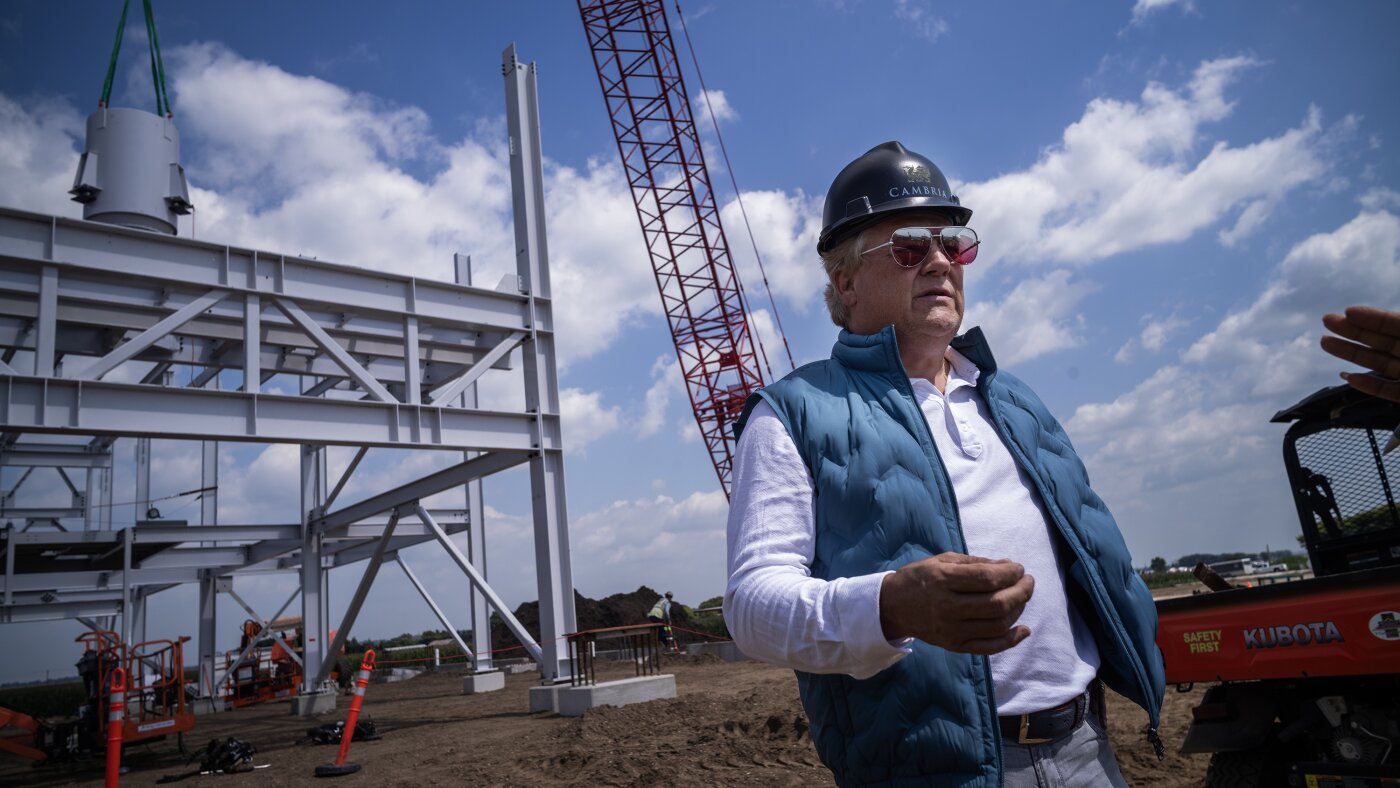
Cambria CEO Marty Davis Tariff Request on Quartz Draws Competitor Backlash - {璐㈡姤鍓爣棰榼
2026-05-18 17:31:53 | EST
News Cambria CEO Marty Davis Tariff Request on Quartz Draws Competitor Backlash
News

Cambria CEO Marty Davis Tariff Request on Quartz Draws Competitor Backlash - {璐㈡姤鍓爣棰榼

Cambria CEO Marty Davis Tariff Request on Quartz Draws Competitor Backlash
News Analysis
{鍥哄畾鎻忚堪} Cambria CEO Marty Davis has successfully petitioned the U.S. government to impose tariffs on imported quartz, a move that has sparked criticism from business rivals who allege the protectionist measure is being weaponized against competitors. The tariffs, granted through the Section 232 process, could reshape the domestic quartz market and raise costs for downstream industries.

Live News

- Tariff Mechanics: The U.S. government imposed a 25% tariff on imported quartz under Section 232, a Cold War-era law originally intended to protect industries vital to national defense. Critics argue this application stretches the law's intent. - Competitor Pushback: Rival quartz manufacturers and importers have accused Cambria of using political influence to gain an unfair advantage. They claim the tariffs will increase material costs for U.S. home construction and renovation projects. - Market Implications: The tariffs could reshape the domestic quartz market, potentially driving up prices for consumers and squeezing margins for independent fabricators who rely on imported slabs. Cambria, as a domestic producer, may benefit from reduced foreign competition. - Political Context: Marty Davis is a known donor to Republican candidates, including former President Trump. The connection has fueled debate over whether political donations influenced the tariff decision, though no direct evidence of impropriety has been presented. - Regulatory Scrutiny: The case has reignited calls for reforming Section 232, with some lawmakers urging stricter oversight to prevent its use for company-specific protectionism. The Biden administration has not signaled changes to the current tariff structure. Cambria CEO Marty Davis Tariff Request on Quartz Draws Competitor Backlash{闅忔満鎻忚堪}{闅忔満鎻忚堪}Cambria CEO Marty Davis Tariff Request on Quartz Draws Competitor Backlash{闅忔満鎻忚堪}

Key Highlights

Marty Davis, CEO of Cambria, a major U.S. manufacturer of engineered quartz surfaces, has leveraged his political connections—including donations to former President Donald Trump—to secure tariffs on imported quartz. According to a report by NPR, Davis requested that the U.S. government impose duties on quartz imports under the Section 232 national security provision, which allows tariffs on goods deemed critical to national defense. The Trump administration granted the request, imposing a 25% tariff on imported quartz from countries including India, Turkey, and Spain. Cambria, based in Minnesota, produces quartz countertops and slabs, positioning itself as a domestic manufacturer in a market heavily reliant on foreign supply. Davis, a known Trump donor, has defended the tariffs as necessary to protect American jobs and national security. However, competitors in the quartz industry have cried foul, arguing that the tariffs are a strategic move to stifle competition and raise prices for consumers. Industry groups representing importers and fabricators have voiced concerns that the tariffs would increase costs for U.S. businesses and homebuilders, potentially harming the broader construction sector. The dispute highlights the controversial use of national security tariffs to benefit a single company, raising questions about the fairness and transparency of the process. The case has drawn attention from lawmakers and trade experts, with some calling for a review of how Section 232 is applied. Cambria has not publicly commented on the criticism, but the company has long maintained that the tariffs are necessary to combat unfair trade practices and ensure a level playing field for domestic producers. Cambria CEO Marty Davis Tariff Request on Quartz Draws Competitor Backlash{闅忔満鎻忚堪}{闅忔満鎻忚堪}Cambria CEO Marty Davis Tariff Request on Quartz Draws Competitor Backlash{闅忔満鎻忚堪}

Expert Insights

Trade policy analysts suggest that the Cambria quartz tariff case underscores a broader tension in U.S. trade policy: the use of national security justifications for protectionist measures that may primarily benefit individual firms. While Section 232 has historically been used for industries like steel and aluminum, its application to quartz is relatively novel. Economists caution that tariffs on imported quartz could have unintended consequences. “The immediate effect may be higher costs for U.S. businesses that rely on imported quartz, potentially leading to increased prices for consumers and slower activity in the home improvement sector,” one trade expert noted. “Over the longer term, it could incentivize more domestic production, but that transition would likely take years.” From an investment perspective, the case highlights how regulatory and trade decisions can create winners and losers within the same industry. Companies with significant domestic manufacturing capacity, like Cambria, may benefit from reduced import competition, while importers and distributors could face margin pressure. However, the broader market impact may be limited unless other countries retaliate or similar tariff requests proliferate. The controversy also raises governance questions about the transparency of the trade remedy process. “When a single company successfully petitions for tariffs on a product that many competitors import, it naturally raises concerns about fairness,” said a trade law expert. “The burden should be on the government to demonstrate that such actions truly serve national security, not just corporate interests.” Disclaimer: This analysis is for informational purposes only and does not constitute investment advice. Cambria CEO Marty Davis Tariff Request on Quartz Draws Competitor Backlash{闅忔満鎻忚堪}{闅忔満鎻忚堪}Cambria CEO Marty Davis Tariff Request on Quartz Draws Competitor Backlash{闅忔満鎻忚堪}
© 2026 Market Analysis. All data is for informational purposes only.